The First Hours
The first 24 hours of a newborn’s life are among the most critical and vulnerable hours of life.. In a well-resourced clinical environment, that danger is manageable. A skilled neonatal team, functioning equipment, clear protocols, and a reliable referral system can make the difference between survival and death. But across much of Nigeria, that set of conditions is not reliably in place. The question that should preoccupy anyone working in newborn health is not simply what works, but why proven solutions so consistently fail to reach the newborns who need them most.
A Global Burden, Unevenly Distributed
Globally, approximately 2.3 million newborns die every year before they reach one month of age, according to UNICEF’s 2023 estimates. Sub-Saharan Africa and South Asia together bear a disproportionate share of the global neonatal mortality burden. In 2024, an estimated 2.3 million newborns died globally, with Sub-Saharan Africa accounting for approximately 50% of neonatal deaths and South Asia a further 33%, despite the two regions together accounting for about 59% of global live births. Neonatal mortality rates also remained highest in these regions, at 26.6 deaths per 1,000 live births in Sub-Saharan Africa and 21.1 per 1,000 in South Asia.
Within Africa, the burden is particularly pronounced in West and Central Africa. The region recorded an estimated 656,000 neonatal deaths in 2024, representing a substantial share of neonatal deaths across the continent. Nigeria is a major contributor to this burden. In 2023, an estimated 258,588 newborns died in Nigeria, accounting for approximately 11% of the 2.31 million neonatal deaths globally that year.
The global health community has made meaningful progress. The Every Newborn Action Plan, launched in 2014 and tracked through regular global reviews, has strengthened political commitment and accelerated coverage of key interventions. WHO and UNICEF have published updated guidance on essential newborn care, small and sick newborn care, and quality improvement at the facility level. The Gates Foundation has invested substantially in innovations and system-level approaches to improving newborn survival in low- and middle-income countries. These investments are consequential. But progress has been uneven, and within Nigeria, the translation of global commitments into consistent quality care at the bedside remains incomplete.
Nigeria’s Reality: Not a Knowledge Problem Alone
Nigeria’s neonatal health challenges are complex and interconnected. Understanding them requires looking beyond the headline mortality statistics.
The quality of care around birth remains a primary concern. A significant proportion of neonatal deaths occur within the first 48 hours of life, a period during which the competence of attending health workers, the availability of functioning equipment, and the reliability of essential commodities such as oxygen can determine whether a baby survives. According to the Nigeria Demographic and Health Survey 2018, the most recently completed full survey, skilled birth attendance and facility delivery have increased in absolute terms, but coverage remains uneven across states, with northern Nigeria consistently below national averages.
Prematurity and complications affecting small and sick newborns are the leading clinical causes of neonatal death in Nigeria, consistent with global patterns. The care of premature infants, including respiratory support, thermoregulation, and feeding, needs both clinical competence and equipment that many facilities, particularly at secondary and primary levels, do not reliably have. Neonatal infections, including sepsis and pneumonia, compound these challenges, and birth asphyxia remains a major cause of death where resuscitation capacity is absent or inadequate.
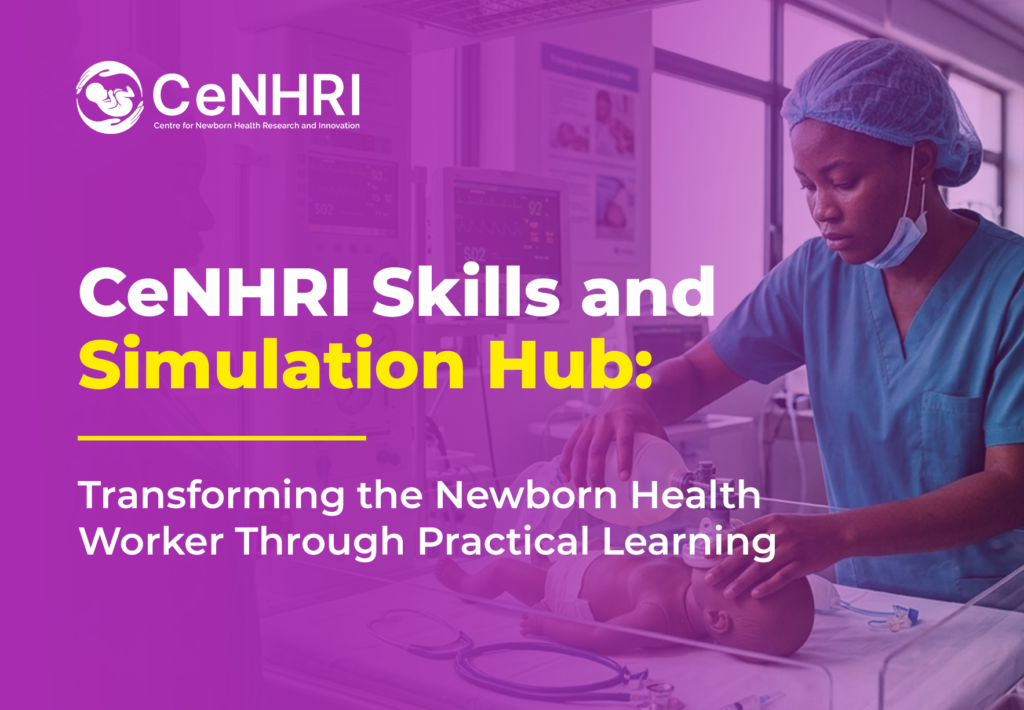
Underpinning all of this is a health workforce that is insufficiently distributed and unevenly trained in neonatal-specific skills. This is not simply a numbers problem. It is a competency and deployment problem. A health worker who has been trained but has never practiced neonatal resuscitation in a supervised environment is not the same as a health worker who is genuinely prepared for a neonatal emergency. The difference is consequential.
Data and evidence gaps further constrain the response. Nigeria has established systems for generating and monitoring health data, including the District Health Information System (DHIS2) and institutionalized mechanisms such as Maternal and Perinatal Death Surveillance and Response (MPDSR). The challenge increasingly lies in how consistently available data are analyzed, interpreted and translated into action. Data from routine health information systems and mortality surveillance may not always be sufficiently triangulated or used at facility, state and national levels to identify patterns in newborn deaths, understand underlying causes and modifiable factors, or guide targeted quality improvement. As a result, opportunities to turn existing evidence into more precise resource allocation, programme targeting and improvements in care can be missed.
The Innovation Imperative: Beyond “Does It Work?”
The neonatal health field has a relatively strong evidence base for what works. Kangaroo Mother Care (KMC), which combines prolonged skin-to-skin contact between a mother and her low-birth-weight or preterm infant with breastfeeding support, has been shown to reduce mortality. A Cochrane review of randomized controlled trials found a 40% reduction in mortality at discharge or 40–41 weeks’ postmenstrual age among low-birth-weight infants receiving KMC compared with conventional neonatal care.
The neonatal health field already has a substantial evidence base for effective interventions. WHO recommends antenatal corticosteroids for women with a high likelihood of preterm birth under appropriate conditions, continuous positive airway pressure (CPAP) for preterm infants with respiratory distress syndrome, and essential newborn care practices that include neonatal resuscitation and infection prevention. The challenge, therefore, is not primarily one of discovering what works, but of ensuring that proven interventions are consistently delivered, adapted to context, and implemented at the scale and quality required to improve newborn survival.
The challenge is implementation. How do we make proven interventions work consistently, affordably, and equitably within Nigerian health systems — across facilities with variable infrastructure, varying levels of workforce capacity, and uneven supply chains?
This is where implementation science becomes essential. The question is not only whether an intervention works in a controlled trial setting but whether and how it can be embedded into routine care, adapted to different contexts, maintained over time, and scaled without losing effectiveness. Simulation-based training for health workers, for example, has demonstrated effectiveness in improving clinical competence, but its impact depends heavily on how training is designed, delivered, and followed up. Quality improvement approaches — structured cycles of data collection, analysis, and practice change — have shown promise in several African contexts but require institutional commitment and technical support to sustain.
Innovation in newborn health also includes system-level approaches: strengthening referral pathways so that newborns in distress at primary facilities can reach higher-level care in time; designing family-centred care models that support mothers to participate actively in newborn care; and developing locally appropriate technologies that are both clinically effective and affordable within Nigerian health budgets. Digital tools and data systems can support these efforts, but they are enablers, not solutions in themselves.
The Centre for Newborn Health Research and Innovation is one of the institutions working to address this implementation challenge in Nigeria — conducting a lactation management training for health workers as part of its early capacity-strengthening work and positioning itself to generate and translate locally relevant evidence into practice and policy over time.
What Is Already Being Done
Nigeria is not starting from a blank page. The Federal Ministry of Health and Social Welfare has committed to strengthening the continuum of care for mothers and newborns, and the National Primary Health Care Development Agency has been a significant actor in expanding coverage at the community level. WHO Nigeria and UNICEF have provided technical and financial support to improve neonatal care practices and strengthen health system capacity for newborn health.
Globally, the Lancet’s 2023 analysis of progress toward Every Newborn targets highlighted that countries making the fastest progress shared common features: strong political commitment, sustained investment in the health workforce, and functioning data systems that allowed evidence to drive decision-making. Nigeria’s path to meaningfully reducing neonatal mortality will require all three.
The Way Forward
Four priorities stand out.
First, Nigeria must invest in locally generated, implementation-focused research. Global evidence provides a foundation, but Nigerian health contexts with their specific workforce configurations, supply chain realities, and population dynamics, require locally produced evidence that can guide practical decision-making at the facility, state, and national levels.
Second, quality of newborn care must be strengthened systematically, not episodically. This means embedding quality improvement approaches into facility management, establishing functional referral systems, and ensuring that skilled, well-supervised health workers are consistently present where births happen.
Third, innovations that have demonstrated evidence and feasibility in similar contexts must be scaled deliberately. Kangaroo Mother Care, for example, is not adequately utilised across Nigerian facilities despite decades of evidence. Scaling proven approaches demands both political commitment and technical implementation support.
Fourth, government ownership and financing are non-negotiable. Externally funded programmes that do not build domestic ownership and institutional capacity will not produce sustainable change. The sustainability of newborn health gains in Nigeria depends on health systems that are strengthened from within.
Conclusion
The next frontier in newborn survival is not the discovery of new interventions. It is the disciplined, context-sensitive translation of what we already know, and what we are still learning — into care that reliably reaches every newborn, regardless of where they are born. Nigeria has the institutional infrastructure, the clinical expertise, and the policy frameworks to accelerate progress. What is needed now is the will to connect these assets, invest in locally grounded research and innovation, and hold systems accountable for the quality of care they deliver. Every newborn’s survival should be determined by the strength of the system around them — not by the accident of their birthplace.
About the Author
Wuraola Adelere is a communications professional with over three years of experience working at the intersection of strategic communications, brand storytelling, and public health and development. Her work spans communications strategy, content development, digital communications, and storytelling, with a focus on helping organisations communicate complex ideas and impact with clarity and purpose. She is particularly interested in brand, thought leadership, public health communication, and the role of communication in building credible, impactful institutions.